Research
【Research Background】 Unknown Impacts of Environmental Chemicals on Higher-Order Brain Functions and Key Challenges in Toxicological Evaluation
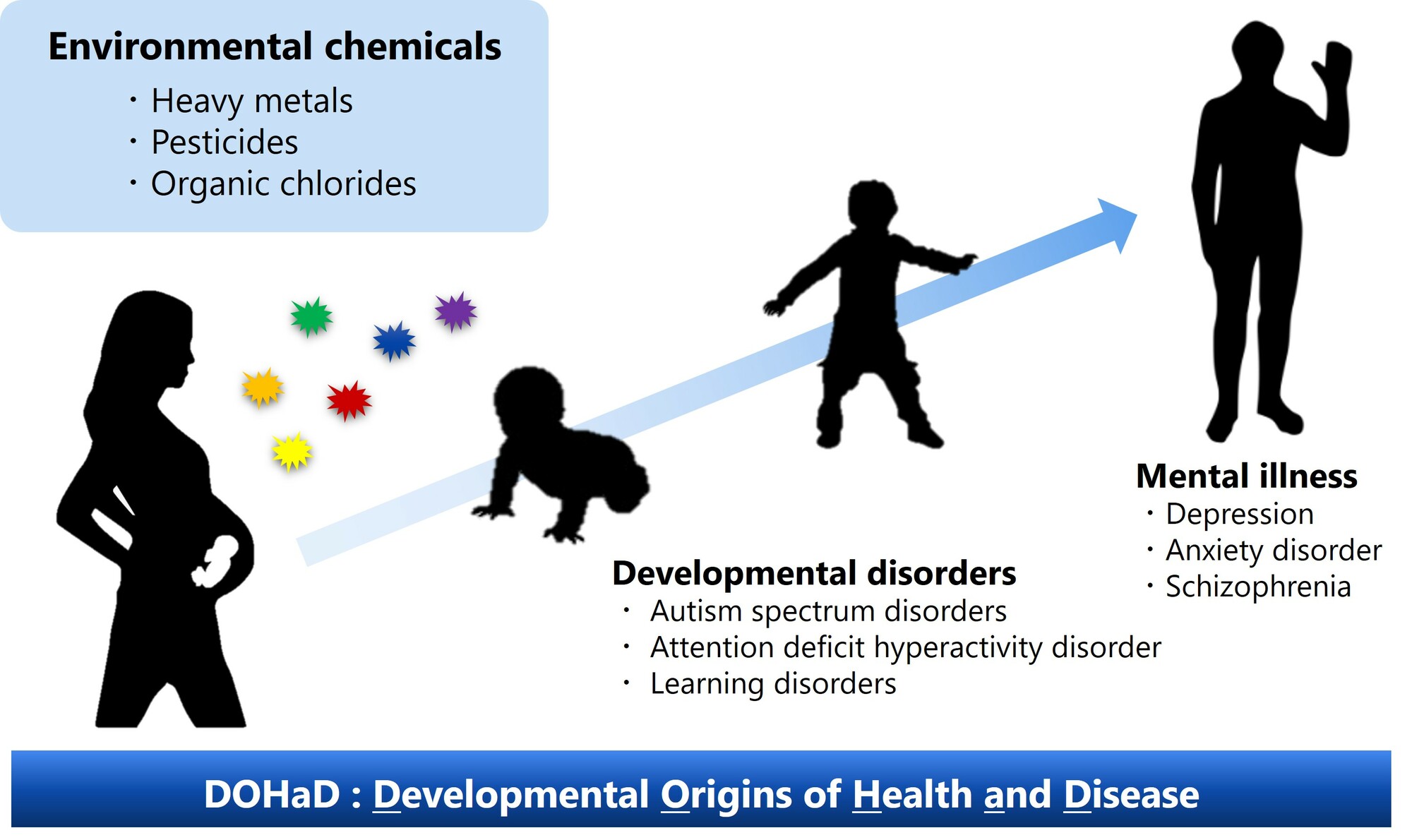
In modern life, tens of thousands of chemical substances are used on a daily basis. Recent epidemiological studies have revealed that prenatal and fetal exposure to pesticides, heavy metals, and organochlorine compounds contributes to an increased risk of neurodevelopmental disorders—such as Autism Spectrum Disorder (ASD), Attention-Deficit/Hyperactivity Disorder (ADHD), and Learning Disabilities (LD)—as well as psychiatric disorders in adulthood, including depression and schizophrenia. This concept, known as DOHaD (Developmental Origins of Health and Disease), highlights how environmental factors during early development influence long-term health and has garnered widespread attention.
Why, then, do chemical substances that have undergone rigorous safety testing still exert unexpected effects on our nervous system? One key reason is that conventional toxicity testing only evaluates "visible" neurotoxicity, such as ataxia or structural disruption of brain tissue. Consequently, detecting "invisible" neurotoxicity—where cognitive and emotional functions are impaired despite an outwardly normal appearance—remains a major challenge. Furthermore, current testing methods require a substantial number of animals, time, and labor while providing limited data. They fall short of fully reproducing the complexities of higher-order human brain functions, as well as real-world exposure scenarios where multiple chemicals interact at low concentrations.
To bridge these gaps, our laboratory is dedicated to:
Elucidating the upstream molecular mechanisms by which chemical substances induce neurotoxicity.
Developing novel, highly sensitive, and efficient toxicity assessment methods and biomarkers.
Through these research initiatives, we aim to advance risk assessment methodologies for essential modern chemicals. Ultimately, our goal is to protect and promote the health of future generations by detecting and mitigating potential chemical risks before they manifest as diseases.