Research
Elucidating Novel Neurotoxicity Mechanisms Mediated by Glia–Neuron Interactions
Glial cells, which account for approximately 80% of all cells in the brain, were long considered to be merely passive structural support. In recent years, however, it has become clear that they actively modulate neuronal functions through synapse formation and regulation. In particular, microglia maintain the brain's microenvironment by pruning redundant synapses and clearing abnormal substances. Nevertheless, excessive microglial activation can trigger neuroinflammation—a process increasingly recognized for its role in the pathogenesis of various neurological disorders (the neuroinflammation hypothesis). Despite its critical importance, current regulatory toxicity testing completely lacks endpoints capable of evaluating glial toxicity, and the effects of environmental chemicals on glial cells remain largely unknown.
To bridge this gap, our laboratory is actively working on:
Developing high-throughput screening assays to evaluate chemical-induced glial activation.
Elucidating the precise molecular mechanisms by which chemical substances disrupt microglia–neuron crosstalk.
Identifying novel biomarkers with a specific focus on exosomes.
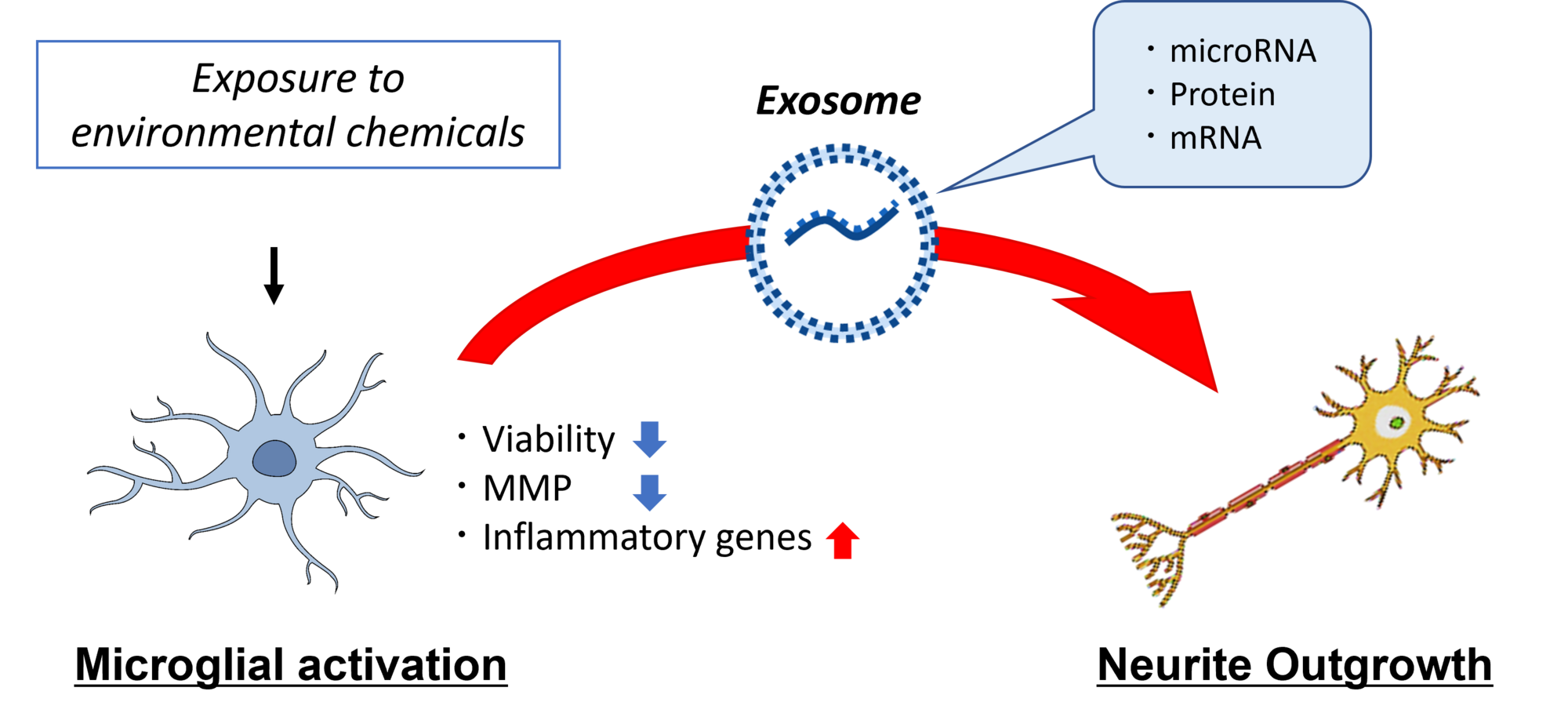
Notably, we have recently discovered that a specific pesticide metabolite activates microglia, triggering the release of exosomes. These exosomes transport distinct microRNAs into neurons, subsequently influencing neuroprotection and neurite outgrowth (manuscript in preparation).
We anticipate that these research initiatives will not only help unravel the pathogenesis of neurological disorders stemming from glial activation but also pave the way for the development of next-generation neurotoxicity testing methods.